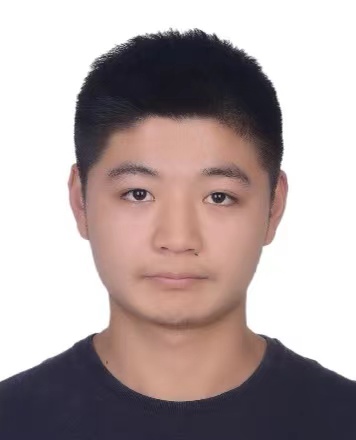
Doctoral Thesis
基于移动可变形组件法和共形参数化技术的复杂曲面薄壁结构拓扑优化研究
Author: Wendong Huo
Advisors: Prof. Xu Guo & Prof. Chang Liu
Institution: Dept. of Engineering Mechanics, DUT
Finalized: Nov 18, 2025
Excerpt (click to expand)
Research on Topology Optimization for Thin-Walled Structures with Complex Surfaces Based on the Moving Morphable Components (MMC) Method and the Conformal Parameterization Technique.
Journal Publications (pre-postdoc)
Hierarchical shape optimization for complex shell structures considering global and local shape perturbations
Published at: Struct. Multidiscip. Optim.
DOI: 10.1007/s00158-025-04128-2
Excerpt (click to expand)
Designing and optimizing the shape of complex shell structures via globla and local perturbations
Published on: August 21, 2025
Explicit topography design for complex shell structures based on embedded spline components
Published at: J. Mech. Phys. Solids
DOI: 10.1016/j.jmps.2024.105974
Excerpt (click to expand)
Leveraging surface topography variations to enhance the stiffeness of complex thin-walled structures
Published on: November 24, 2024
A novel explicit design method for complex thin-walled structures based on embedded solid moving morphable components
Published at: Comput. Methods Appl. Mech. Eng.
DOI: 10.1016/j.cma.2023.116431
Excerpt (click to expand)
Constructing embedded solid components to address the problems of applying BCs and multiple design requirements in the shell models
Published on: September 28, 2023
Explicit layout optimization of complex rib-reinforced thin-walled structures via computational conformal mapping (CCM)
Published at: Comput. Methods Appl. Mech. Eng.
DOI: 10.1016/j.cma.2022.115745
Excerpt (click to expand)
Enhancing stiffness of complex thin-walled structures via optimizing the layout of the attached ribs
Published on: February 01, 2023
Topology optimization on complex surfaces based on the moving morphable component method and computational conformal mapping
Published at: ASME J. Appl. Mech.
DOI: 10.1115/1.4053727
Excerpt (click to expand)
Explicit topology optimization for complex shell structures via the MMC method and the CCM technique
Published on: May 04, 2022
During undergraduate
Isogeometric dual reciprocity boundary element method for solving transient heat conduction problems with heat sources
Published at: J. Comput. Appl. Math.
DOI: 10.1016/j.cam.2020.113197
Excerpt (click to expand)
Solving transient heat conduction problems with heat sources via IG-DRBEM. Up to now, the isogeometric boundary element method (IGBEM) has been widely applied in different fields, and the solved problems are basically independent of time. But an excellent numerical method is more than that, so it is necessary to explore a new IGBEM which can solve time-domain problems. Based on this, the isogeometric dual reciprocity boundary element method (IG-DRBEM) is proposed to solve transient heat transfer problems with heat sources. The introduction of the dual reciprocal method enables the IGBEM to solve the transient heat transfer problem conveniently. At the same time, it does not need to divide elements within the domain, which maintains the advantage of the IGBEM. First, the boundary domain integral equation is established by the weighted residual method and the field variables are discretized by NURBS basis functions. Then, the domain integral in the integral equation is transformed into the boundary by the classical dual reciprocity method. Finally, the standard first-order ordinary differential equations are formed. In order to examine the accuracy of the proposed method, several typical numerical examples are discussed carefully. The presented method can provide a new idea for solving time-dependent problems by IGBEM.
Published on: March 15, 2021
You can also find my articles on Google Scholar.